
Does the Joshua Tree Have Spiritual Energy?


Many who visit Joshua Tree National Park wonder, Does the Joshua Tree have spiritual energy?
I love national parks, especially those in California, where I live; Joshua Tree National Park is one of the most underrated parks.
There is something special about it, which you feel as soon as you enter this unique landscape with its Dr. Seuss-like Joshua Trees.
Each time I visit, I return with renewed energy and want to go again.
Joshua Tree is a popular destination for Southern Californians. It is located in the California desert on the southern tip of the Mojave.
Many people deeply respect and revere the Joshua tree for its cultural and spiritual significance.
So, does the Joshua tree have a spiritual meaning and energy? And where does this meaning originate from?

Spiritual Energy in Joshua Tree National Park
In recent years, Joshua Tree National Park has become a spiritual destination for those seeking solace, healing, and transformation among the rugged beauty of the desert landscape.
A place of multiple energy vortices, it’s considered one of the Earth’s most potent and energetic places.
The ancient energy of the Earth resonates in this region of California’s High Desert.
Joshua Tree has a renowned reputation for land-based multiple energy vortices — the forces of the vortex in this spiritual, ancient place magnify everything we humans bring to it on emotional, spiritual, physical, and mental levels.

Indigenous cultures have long revered and safeguarded the area for its sacred energy, which is believed to foster balance and harmony within oneself and the environment.
This unique energy and mystique continue to connect individuals and communities to Joshua Tree National Park, making it a hub for creative inspiration and personal discovery.
For many, a visit to Joshua Tree is a journey towards divine guidance and a deeper understanding of oneself.
Joshua Tree Spiritual Energy
When working with the Earth’s energy, it’s crucial to do so with care.
These vortexes can intensify emotions, whether positive or negative, which is why native tribes cherish their land as sacred and are cautious about its preservation.
The Joshua tree, with its peaceful and uplifting energy, is a beacon for those seeking tranquility and healing.
Its unique properties underscore the profound impact of nature on our emotional well-being.

Joshua Tree Spiritual Vortex
According to Native beliefs, the area around the park is renowned for its powerful energy vortexes.
The Joshua tree vortex isn’t some California woo-woo thing; science backs it up.
Vortexes are areas of amplified electrical energy that can be detected using scientific devices.
These vortexes are likened to the chakras described in the science of yoga, which deals with understanding and manipulating energy.
It’s believed that the Joshua tree may be connected to a network of energy vortices, which are unique energy centers that can profoundly affect one’s well-being.
By visiting such locations, you may benefit from the powerful energies in various ways:
- Unlocking your inner healing abilities
- Gaining insight into your life’s purpose
- Strengthening your energetic and spiritual connections

These energetic hotspots, known as vortexes, were discovered and revered by Native Americans long before modern technology could detect them.
According to ancient tribes, vortexes magnify emotions, spirituality, physical sensations, and mental experiences placed within them.
When you visit a Joshua tree or find yourself in its presence, remember to be open to the spiritual energy it offers.
Embrace its teachings, and let this spiritual beacon inspire and uplift you on your journey toward self-discovery and inner growth.
Joshua Tree Spiritual Meaning
The meaning of the Joshua tree can vary depending on cultural, spiritual, and personal perspectives.
Different groups and individuals may attribute different symbolic meanings to the Joshua tree.
The most widely known meaning is a symbol of strength.
Here are some common interpretations:
Resilience and Adaptation: The Joshua tree’s ability to thrive in the harsh desert symbolizes resilience, strength, and adaptability. It serves as a reminder that one can endure and flourish even in challenging circumstances.
Connection to Nature and Spirituality: For some, the Joshua tree represents a connection to nature and the spiritual world. It is seen as a sacred plant that holds spiritual energy and fosters a deeper connection to the land and its ancient wisdom.
Transformation and Growth: Due to its slow growth and unique appearance, the Joshua tree can be seen as a symbol of personal growth, transformation, and enlightenment. It may inspire individuals to embrace change and evolve.
Symbol of the American West: The Joshua tree is closely associated with the American West, particularly the deserts of California, Nevada, Arizona, and Utah. As such, it can also symbolize the spirit of exploration, adventure, and the vastness of the American landscape.
Preservation and Conservation: Given the concerns about its conservation status, the Joshua tree has also become a symbol of environmental protection and the need to protect fragile ecosystems.
Ultimately, the “meaning” of the Joshua tree is open to interpretation, and different people may find their significance and connection to this iconic desert tree based on their experiences, beliefs, and cultural backgrounds.
What Does the Joshua Tree Symbolize?
Joshua trees hold deep symbolism in Western spiritual beliefs, often seen as a sign of faith, determination, and spiritual growth.
The Joshua tree is a powerful symbol of love, hope, and faith, demonstrating that beauty and life can thrive even under challenging circumstances and environments.
It carries a heartwarming narrative of survival and resilience in the face of overwhelming odds. This symbolism has taken on significant importance for the locals of Joshua Tree.

The Mythology of Joshua Tree
According to legend, Mormon pioneers named this tree after the biblical figure of Joshua, as its shape and form resembled the outstretched limbs as a guiding supplication for travelers heading westward.
However, this tale lacks historical evidence to support it.
The Joshua Tree is regarded as a religious symbol in Christianity. Some believe it to be the tree that guided Joshua, Moses’ successor, on the path to Jericho.
Because of this association, it is often nicknamed the “Jesus Tree.”
Physical Characteristics of the Joshua Tree
When you look at a Joshua tree, one of the most striking features you’ll notice is its twisted limbs.
These seemingly chaotic branches give the tree a unique appearance, capturing the essence of resilience and character amidst the arid desert surroundings.
It’s no wonder that this fascinating tree has gained the interest of many people searching for spiritual energy and meaning in nature.
As a yucca palm, specifically Yucca brevifolia, these strange trees have the characteristics you’d expect from a desert-adapted plant.
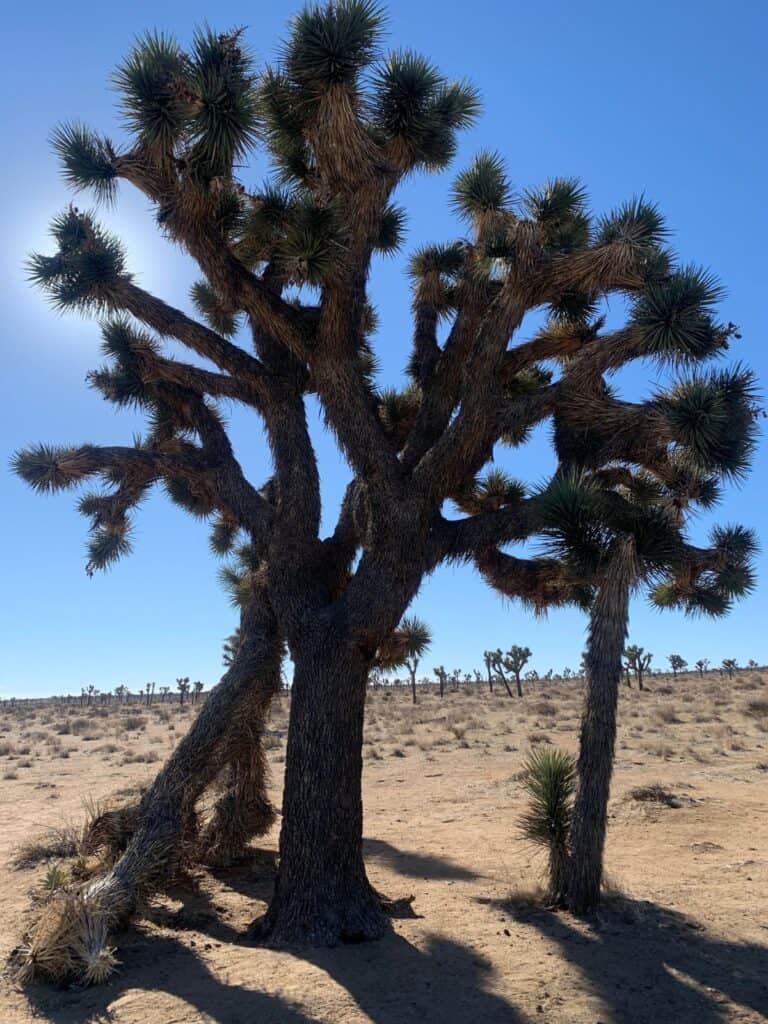
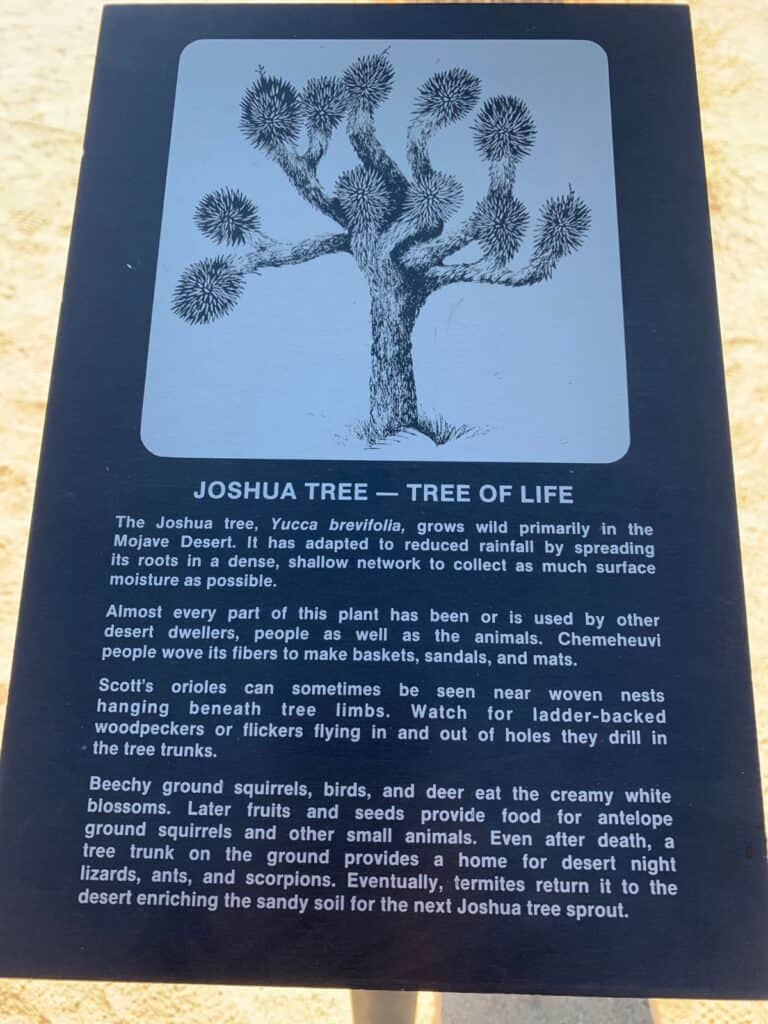
Their thickened limbs store water, allowing them to thrive even in the harshest conditions.
While their limbs may initially seem chaotic, they serve an essential purpose: reaching out to the sky to absorb as much sunlight as possible.
During the spring, the Joshua tree adorns itself with flower buds that burst into stunning clusters of creamy white flowers.
Beyond their visual appeal, these flowers play a crucial role in pollination, ensuring the continuation of the species and contributing to the ecosystem’s balance.
So, as you explore the wonderful world of Joshua trees and their potential spiritual energy, remember their incredible physical features.
Their twisted limbs, yucca palm classification, and beautiful flower buds contribute to their unique charm and make them natural symbols of resilience and strength in adversity.
Where is Joshua Tree National Park
Joshua Tree National Park is located in Southern California, about 2.5 hours east of Los Angeles. It spans parts of both Riverside County and San Bernardino County.
The park is situated in the Mojave Desert and covers an area of over 790,000 acres (around 1,235 square miles or 3,200 square kilometers).
Joshua Tree Map
Visiting the Joshua Tree National Park
Joshua Tree National Park is a place where many visitors come to experience both its scenic beauty and unique spiritual energy.

The park offers a range of activities and accommodations to suit various preferences.
One of the great ways to fully immerse yourself in the park is by camping.
There are multiple campgrounds available to accommodate different levels of experience and preferences.
Some campgrounds offer amenities such as potable water and flush toilets, while more primitive sites provide a more rugged and solitary experience.
As you explore the park, you’ll likely come across the famous Joshua trees themselves.
Many people believe these trees possess a spiritual energy that can bring balance and peace. Being present and mindful while walking amongst these trees may amplify the peaceful effect on your mind and spirit.
While visiting, take the opportunity to engage in other activities as well.
The park offers many hiking trails, ranging from short, easy walks to more challenging, multi-day treks through the desert wilderness. Some trails may even take you past areas where energy vortices are believed to exist, which could provide a more profound spiritual experience.
👉🏻 While in in the park check out this easy 1.7 mile loop to Joshua Tree Skull Rock, you won’t want to miss it!
Remember, during your visit to Joshua Tree National Park, it’s essential to respect the environment and follow the Leave No Trace principles.
Doing so helps ensure that the park remains as pristine and spiritually uplifting as possible, not just for yourself but also future visitors.
Safety Tips for Joshua Tree National Park
To ensure a safe and enjoyable hike in Joshua Tree National Park, follow these safety tips:
- Stay hydrated: The desert climate can be dry and hot, so bring plenty of water on your hike. I use the Water-To-Go Filterable Water Bottle. I can fill up anywhere and know the bottle filters out harmful contaminants.
- Wear sunscreen and a hat: Protect yourself from the sun’s harsh rays by applying sunscreen and wearing a hat.
- Stick to the designated trail: Don’t venture off the trail to avoid potential dangers, such as loose rocks or wildlife encounters.
- Check weather conditions: Be aware of the local weather conditions before hiking, especially during the hotter months.
- Tell someone your plans: Let someone know where you’re going and when you expect to return in case of an emergency.
- Joshua Tree has many bathrooms at the beginning of most trail heads.
Interesting Things to Know About the Park
- Joshua Tree National Park is the meeting point of two distinct desert ecosystems, the Mojave Desert and the Colorado Desert
- This park hosts 57 mammal species
- It comprises 3 different ecosystems
- Joshua trees offer various benefits and uses for both humans and animals, from houseplants to delicious fruit and works of art
- Joshua Tree National Park is the only place on Earth where you’ll find these native Joshua trees
A Word on Climate Change
Climate change has been causing Joshua Tree National Park to become hotter and drier over the past century, largely due to human-caused greenhouse gas emissions from fossil fuels such as coal, oil, and natural gas.
Joshua trees depend on a special relationship with yucca moths for pollination. Climate change threatens this relationship and, consequently, the trees’ ability to reproduce.
Increased temperatures and drought conditions make the trees more susceptible to fires, which can quickly devastate a Joshua tree forest.
Sadly, by 2100, climate change is projected to significantly reduce the Joshua Tree’s suitable habitat, particularly in the southern parts of its range.
As a result, the tree may struggle to survive in its namesake park by the end of this century.
Does the Joshua Tree Have Spiritual Energy: FAQs
Here are your most burning questions about Joshua Tree asked and answered.
Is Joshua Tree a spiritual vortex?
Yes. Vortexes are just areas of amplified electrical energy that can be detected using scientific devices. Joshua Tree has many of them. Visit and feel them for yourself.
What is the Joshua Tree and what does it symbolize?
The Joshua tree (Yucca brevifolia) is a distinctive and iconic plant species native to the southwestern United States, primarily found in the Mojave Desert. It is a tall and slow-growing evergreen tree with a thick, sturdy trunk and twisted, gnarled branches that resemble outstretched arms.
It symbolizes many things to different people. Joshua Trees hold deep symbolism in Western spiritual beliefs, often seen as a sign of faith, determination, and spiritual growth.
The Joshua tree is a powerful symbol of love, hope, and faith, demonstrating that beauty and life can thrive even under challenging circumstances and environments.
It carries a heartwarming narrative of survival and resilience in the face of overwhelming odds. This symbolism has taken on significant importance for the locals of Joshua Tree.
Is Joshua Tree sacred land?
Yes. Joshua Tree is sacred land to the Twenty-Nine Palms Band of Mission Indians, and most who visit Joshua Tree National Park feel the same way.
What is so special about Joshua Tree?
Its twisted, outstretched branches and sharp, sword-like leaves give the Joshua tree a striking and otherworldly appearance, making it instantly recognizable and iconic. They have a distinctive feel that can’t be matched anywhere else
What magical properties does Joshua Tree have?
According to belief, the Joshua tree possesses a neutralizing effect, balancing both positive and negative energies, allowing visitors to find peace regardless of their emotional state. The national park is known to have 18 vortices on its land.
What are 3 interesting facts about the Joshua Tree?
One: the Joshua tree is not a tree but a Yucca. Despite being called a “tree,” the Joshua tree is botanically classified as a yucca plant. Two: The Joshua tree has a unique and vital relationship with the yucca moth (Tegeticula species). The moth is the primary pollinator of the Joshua tree, and the tree, in turn, provides a suitable habitat for the moth’s larvae to develop within its flowers. And three: the Joshua tree has an exceptionally slow growth rate, taking several decades to reach maturity.
Why do people love Joshua Tree so much?
Joshua Tree is a very tranquil place. The town is very laid back, the roads are sparse, the weather is great, and the National Park is easy to navigate, with incredible hikes for every level. The views are breathtaking, the wildlife is diverse, and the endangered nature of the Joshua Trees means this destination is a must-visit for various travelers.
What did native Americans call Joshua Tree?
Before European explorers reached the American Southwest, Native Americans were already familiar with the Joshua tree. Each tribe that inhabited the region had a unique name for this giant yucca. The Southern Paiute referred to it as “sovarampi.” The Mojave people referred to it as “hunuvat chiy’a” or “humwichawa.” The Cahuilla people called it “hunuvat chia.” The Chemehuevi people called it “cutting leaves for Joshua.”
How did native Americans use the Joshua Tree?
The abundant plants and animals of the Joshua Tree/Mojave Desert area were crucial for the livelihood of the Native Americans. They used various plants and trees to craft bows, arrows, baskets, and tools. As for sustenance, their diet ranged from small and large mammals to reptiles during drier periods.
Why should we protect the Joshua Tree?
Sadly, by 2100, climate change is projected to significantly reduce the Joshua Tree’s suitable habitat, particularly in the southern parts of its range. As a result, the tree may struggle to survive in its namesake park by the end of this century.
Can one experience spiritual energy at Joshua Tree?
Visitors to Joshua Tree National Park often report feeling a sense of peace, balance, and spiritual energy while in the presence of these unique trees. In addition to the natural beauty and energy found within the park, several energy vortices are believed to enhance one’s spiritual experience.
What’s the story behind the Joshua Tree name?
The name of the Joshua tree can be traced back to early Mormon pioneers who named it after the biblical figure, Joshua. They saw the tree’s outstretched branches as a symbol of Joshua praying and reaching out to the heavens in times of struggle.
What is the connection between Joshua Tree and U2?
The Irish rock band U2 chose Joshua Tree National Park as the location for the cover photo of their 1987 album, “The Joshua Tree.” The band appreciated the symbolism and spiritual energy found within the park and felt it was a fitting representation of the themes explored in the album. This connection has helped raise awareness and appreciation for the Joshua Tree’s significance and beauty.
How is Joshua tree related to Christianity?
Legend has it the Joshua tree derives its name from the biblical figure, Joshua. Mormon pioneers are said to have named the tree after him, as the tree’s outstretched branches reminded them of Joshua praying and reaching out to the heavens.
Is Joshua Tree a sacred site?
Yes, many people consider the Joshua Tree to be a sacred site due to its spiritual energy. The unique environment and landscape of Joshua Tree National Park are believed to be a source of inspiration, healing, and balance for those who visit the area.
Wrap-Up: Does the Joshua Tree Have Spiritual Energy?
The Joshua tree is an iconic symbol of the Southwest and holds spiritual significance that has drawn seekers for millennia. It remains a mysterious marvel of nature, known to only a few, yet deserving of wider appreciation.
Read More About California
- The Best Private San Francisco to Napa Tour
- Napa Valley in the Fall
- The Catalina Island Ferry: Everything You Need to Know
- Cheapest Way to Get to Catalina Island
- How to Plan a Road Trip in 19 Steps
- Renting a Golf Cart on Catalina Island
California Travel Planning Guide
🚑 Should I buy travel insurance for California?
100% YES! – With basic coverage averaging $1.50 USD per day, enjoy peace of mind with a plan from SafetyWing, one of the biggest names in travel insurance. (Read more)
💦 Can you drink the water in California?
Yes — But I wouldn’t. It doesn’t taste very good and there are contaminants in it. You’ll want to buy a Water-To-Go Bottle, which filters drinking water while on the go (traveling) and helps keep you hydrated.
🚙 Is it safe to rent a car in California?
Yes — Renting a car in California is one of the best ways to explore this vast, awesome state, and kind of a must! I always rent with Discover Cars, which checks both international companies and local California companies, so you get the best rates. (read more)
🏨 What’s the best way to book my California accommodations?
For California hotels, Booking is the best site, but for hostels, use Hostel World. If you’re considering a California Airbnb, don’t forget also to check VRBO, which has better rates than Airbnb.
🧳 What do I pack for California?
Head to the Ultimate California Packing List to get all the information you need about packing for a trip to California.
🛫 What’s the best site to buy airfare to California?
For finding cheap California flights, I recommend Skyscanner.


