
Are Palm Trees Native to California? A Local Explains

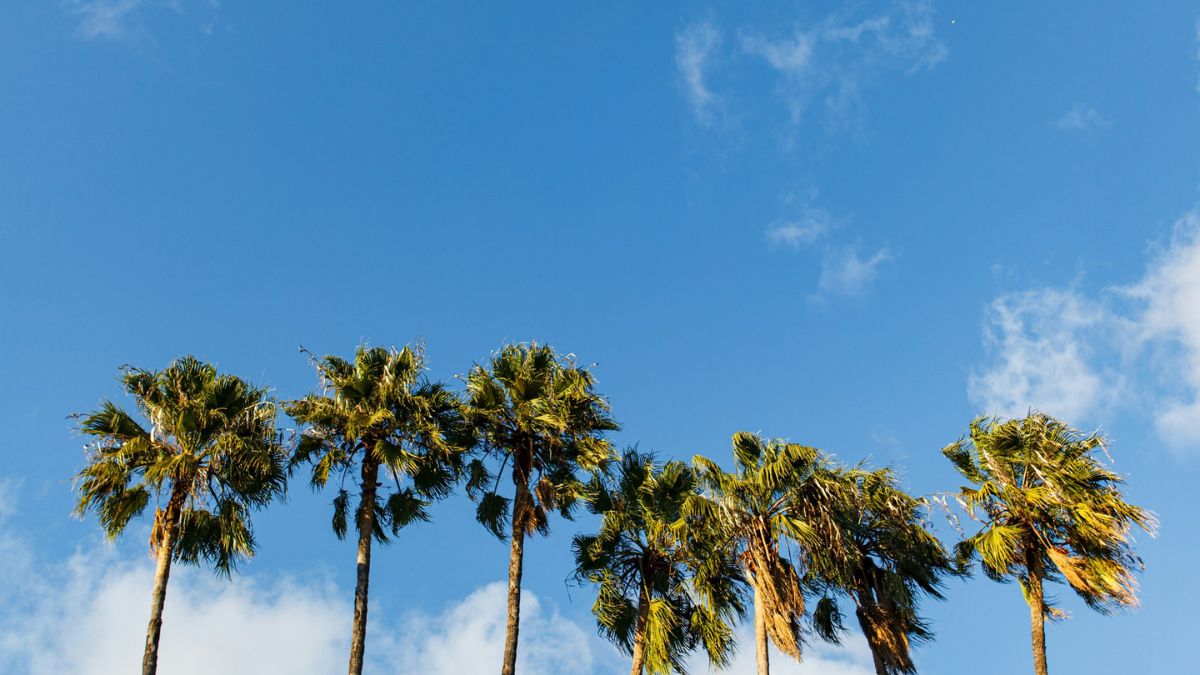
If you’ve ever asked yourself, are palm trees native to California, you’re not alone. Living in Los Angeles, where streets are lined with towering palms swaying against the skyline, it’s easy to assume they’ve always been part of California’s landscape. In reality, most of the iconic palms you see today were imported and carefully planted over the last century to give cities like Los Angeles and San Diego their tropical feel.
But California does have one true native species: the Washingtonia filifera, also known as the California fan palm or desert fan palm. This hardy tree thrives in natural desert oases and hidden canyons across the Colorado Desert and Mojave Desert, where underground springs create pockets of lush greenery in an otherwise arid environment.
Types of Palm Trees in California
In California, there are several types of palm trees, some of which are native to the region while others have been introduced.

Here is a list of some palm tree species found in California:
- Washingtonia filifera (California fan palm or desert fan palm) – Native to California, Arizona, and Baja California in Mexico.
- Washingtonia robusta (Mexican fan palm) – Though native to northwestern Mexico, it is widely planted as an ornamental tree in California.
- Phoenix dactylifera (Date palm) – This palm tree is commonly cultivated in California for its delicious dates.
- Phoenix canariensis (Canary Island date palm) – An ornamental palm widely planted in California for its attractive appearance.
- Chamaerops humilis (Mediterranean fan palm) – This palm is also cultivated as an ornamental tree in California.
- Brahea armata (Mexican blue palm) – A relatively cold-hardy palm tree that is native to Baja California but also cultivated in parts of California.
- Sabal minor (Dwarf palmetto) – Native to the southeastern United States, but some varieties can be found in certain regions of California.
- Sabal palmetto (Cabbage palm) – Native to the southeastern United States, it is occasionally planted as an ornamental palm in California.
- Livistona chinensis (Chinese fan palm) – Widely cultivated as an ornamental palm in California.
- Trachycarpus fortunei (Windmill palm) – A cold-hardy palm species often seen in landscapes in California.
These are some of the palm tree species that can be found in California. However, it’s worth noting that other less common species and hybrid varieties may also be present in the state.
Palm Trees Native to California
The Washingtonia filifera, also known as the California fan palm or desert fan palm, is native to the southwestern United States, specifically in parts of California, Arizona, and Baja California in Mexico.
These palms are commonly found in desert oases, canyons, and other water-rich environments in these regions.

They are well-known for their tall, slender trunks and large, fan-shaped leaves and have become popular ornamental palms in various parts of the world due to their striking appearance and ability to thrive in warm, arid climates.
The California fan palm earned its name because it is the sole palm tree species native to Southern California. This particular type of palm tree is prevalent throughout the entire state of California, especially in Los Angeles.

Palm Trees Native to Northern California
In the northern part of California, a surprising variety of palm trees can be found, despite the area experiencing colder weather more commonly associated with tropical regions.
Some palm species have proven to be naturally adaptable to this cooler climate.
Notable examples include the Coconut trees, Pindo palm trees, Windmill palm trees, and European fan palms, which can be observed thriving in Northern California’s diverse landscapes.
Palm Trees Native to Central California
In Central California, palm trees that thrive in scorching hot weather are commonly found. The region often experiences limited rainfall and predominantly hot conditions.
Palm species such as the California fan palm, King palm, Kentia palm, and Date palm are frequently sighted in this area, as they are well-adapted to the arid and hot climate of Central California.
These resilient palms add to the picturesque landscapes of the region, flourishing in challenging weather conditions.
Palm Trees Native to Southern California

In the southern part of California, you will find just one native species of palm tree that stands out – the California fan palm, also known as Washingtonia filifera. This iconic palm tree can be spotted throughout the city, adding to the picturesque scenery of the region.
Where to See Palm Trees in California
You can find palm trees scattered throughout various regions in California due to their popularity as ornamental trees and their adaptability to the state’s climate.

You can find palm trees scattered throughout various regions in California due to their popularity as ornamental trees and their adaptability to the state’s climate.
Palm trees can be found lining the streets of Los Angeles, beaches, parks, gardens, resorts, and hotels. They are all over Southern California in cities like San Diego and Santa Monica, known for their palm-lined streets and beaches, where palm trees are commonly used for landscaping. Other places to see palm trees are:
- Joshua Tree National Park
- Thousand Palms Oasis in Coachella Valley Preserve
- Palm Springs
- Borrego Palm Canyon in Anza-Borrego Desert State Park
Need to rent a car while visiting the Golden State? Here’s everything you need to know about renting a car in California.
Are Palm Trees Native to California: FAQS

Are palm trees native to any part of California?
One palm tree species is native to California, which commonly lines the streets of Los Angeles, the Washingtonia filifera, widely known as the California palm or the California fan palm. It’s native to areas within the Colorado Desert and the Mojave Desert in California.
Where did palm trees in California originally come from?
The native palm trees of the Mojave and Colorado deserts are originally from those regions. Among them, the Mexican fan palm, native to Mexico, is the most prevalent in this area. Back in the 18th century, missionaries introduced the first ornamental palm trees, inspired by biblical associations, which added to the diversity of palm species found in the region.
Where are palm trees originally from?
The origin of palm trees can be traced back to Africa, from where they eventually spread to North and South America, Asia, and Australia. These versatile trees thrive in temperate, subtropical, and tropical climates, and you can find them flourishing in various states of the United States, including Florida, Georgia, Texas, Louisiana, and California.
Are palm trees native to the Pacific?
Palm trees have their origins in the South Pacific Islands, Southeast Asia, Northern Africa, and India, with only one species being native to California. The Washingtonia filifera, commonly known as the California fan palm or desert palm, thrives in the oases of the Sonoran and Mojave deserts in southeastern California.
Are palm trees an invasive species in California?
California’s skylines boast a rich variety of palm tree species, but among them, only the Washingtonia filifera is native to the state. The rest of the palm tree types you come across, such as the renowned Mexican Palm, are invasive and have been imported from different states and continents across the globe.
Why are palm trees not native to California?
The Washingtonia filifera, also known as the California fan palm or the desert palm, grows in the oases of the Sonoran and Mojave deserts in southeastern California and is the only palm tree species native to California. A few hundred years ago, palm trees were introduced to Los Angeles by Spanish missionaries during the 19th century. Subsequently, in the 1930s, the desert region of Los Angeles was adorned with palm trees from Egypt, Mexico, and various other regions.
Why does California have so many palm trees?
There are several reasons California has so many palm trees. In the 18th century, Spanish missionaries were the first to introduce biblically-significant palm plants to the area.
These palms were highly valued for their “exotic” appeal and, as a result, gained popularity as a decorative plant among affluent Angelenos around the turn of the century.
This historical connection continues to influence the presence and appreciation of palm trees in the region, as do other factors like landscapers and city planners often use palm trees as an element of urban beautification, enhancing public spaces and streetscapes.
The iconic presence of palm trees in California also serves as a visual backdrop for the entertainment industry, including countless movies and TV shows set in the state.
Is California the only state with palm trees?
No. Other states like Florida and South Carolina have palm trees.
Are palm trees native to Los Angeles?
The proliferation of palm trees in Los Angeles can be attributed to their origins in the Colorado Desert and the Mojave Desert. Due to the similarities in climate between these desert regions and Los Angeles, palm trees have been successfully transplanted and now adorn the city’s landscape.
Why were palm trees brought to Los Angeles?
While some may assume that palm trees were planted in Los Angeles primarily for their practical benefits, such as providing shade or fruit, the truth is that their appeal lies more in the convenience and symbolism they bring to the state of California.
The iconic presence of palm trees aligns with the state’s image, making them a cherished and recognizable part of the Californian landscape.
How long do palm trees live?
Some palm trees can live up to 250 years. The longevity of palm trees is quite impressive, with many species capable of living for over a hundred years. California fan palms can thrive for a remarkable span of 80-250 years, while Mexican fan palms have an even more astounding lifespan of approximately 500 years.
However, when palm trees are planted outside their natural habitat, their lifespan tends to be shorter than expected, highlighting the importance of preserving their native environments for their optimal growth and survival.
How tall do palm trees grow?
Palm trees display a wide range of sizes, varying according to their species. On average, palm trees stand between 32 to 50 feet tall, but some can grow even taller.
When transplanted to a location with a climate similar to their natural habitat, palm trees have the potential to reach impressive heights.
California serves as an ideal environment for them, as the state offers abundant sunlight and consistently hot weather, making it an optimal place for their growth and development.
How much water do palm trees need?
Palm trees in California require regular watering, typically at least two to three times a week, to ensure the soil retains sufficient moisture. Despite originating from tropical regions, they don’t demand excessive water.
However, during periods of unusually high temperatures in the city, it becomes necessary to increase the watering frequency to about four to five times a week to ensure the palm trees stay adequately hydrated and healthy.
Wrap-Up: Are Palm Trees Native to California
Palm trees have witnessed a surge in popularity among tourists and locals alike, capturing the fascination of people worldwide.

Their allure extends beyond mere beauty, as they hold profound symbolic meaning for the state of California.
In particular, palm trees have become an iconic symbol of California, prominently associated with the vibrant city of Los Angeles. They embody the laid-back, carefree lifestyle embraced by its residents.
Given their significance, palm trees hold a special place in the hearts of Californians, serving multiple purposes that benefit diverse communities throughout the state. Beyond their visual appeal, these majestic trees contribute to the essence of California’s identity and way of life.
Read More About California
- The Best Private San Francisco to Napa Tour
- Napa Valley in the Fall
- The Catalina Island Ferry: Everything You Need to Know
- Cheapest Way to Get to Catalina Island
- How to Plan a Road Trip in 19 Steps
- Renting a Golf Cart on Catalina Island
California Travel Planning Guide
🚑 Should I buy travel insurance for California?
100% YES! – With basic coverage averaging $1.50 USD per day, enjoy peace of mind with a plan from SafetyWing, one of the biggest names in travel insurance. (Read more)
💦 Can you drink the water in California?
Yes — But I wouldn’t. It doesn’t taste very good and there are contaminants in it. You’ll want to buy a Water-To-Go Bottle, which filters drinking water while on the go (traveling) and helps keep you hydrated.
🚙 Is it safe to rent a car in California?
Yes — Renting a car in California is one of the best ways to explore this vast, awesome state, and kind of a must! I always rent with Discover Cars, which checks both international companies and local California companies, so you get the best rates. (read more)
🏨 What’s the best way to book my California accommodations?
For California hotels, Booking is the best site, but for hostels, use Hostel World. If you’re considering a California Airbnb, don’t forget also to check VRBO, which has better rates than Airbnb.
🧳 What do I pack for California?
Head to the Ultimate California Packing List to get all the information you need about packing for a trip to California.
🛫 What’s the best site to buy airfare to California?
For finding cheap California flights, I recommend Skyscanner.


